Availability: running time
Running, idle, stopped and faulted time is calculated from machine state changes, for any period you choose.

OEE and machine evidence
Astara measures the parts of OEE a machine can prove: how long it ran, where it lost time, how fast it produced and how output compared with the plan. It does not publish a single OEE percentage, and this page explains why.
The trouble with one number
Overall equipment effectiveness multiplies availability, performance and quality. If any one of them is estimated, typed in at the end of a shift or built on an ideal rate nobody agrees on, the result looks precise and means very little.
Astara starts from the other end. It records what the machine itself reports and shows each measure on its own, so your team can see what is driving the loss instead of arguing about the score.
Talk to us about your lineOEE, factor by factor
Each OEE factor needs its own evidence. Here is what Astara captures for each one, and where it stops.
Running, idle, stopped and faulted time is calculated from machine state changes, for any period you choose.
Stops are explained by the machine's alarm codes and by the downtime reasons your supervisors assign.
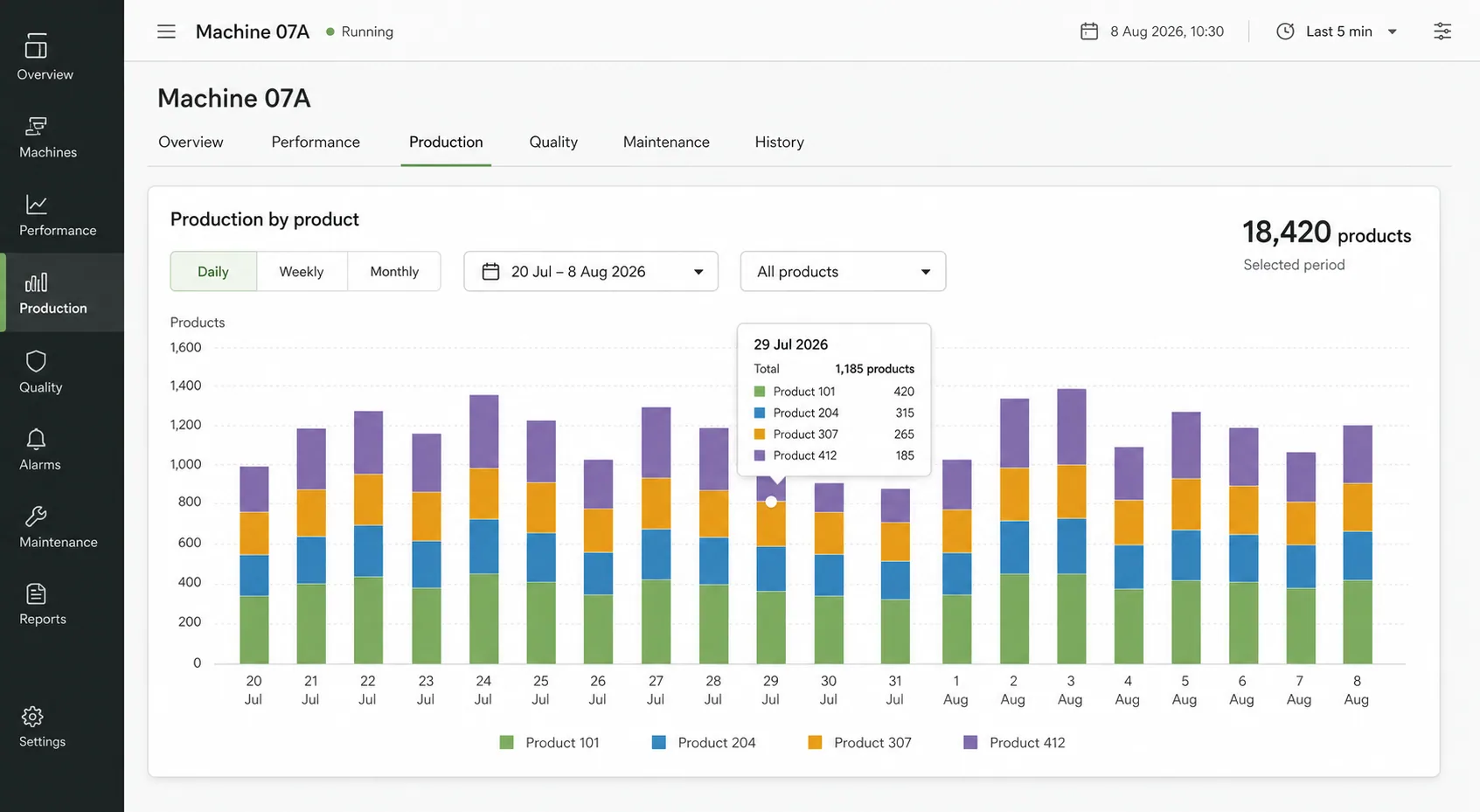
Rate is measured over running time and broken down by product, so slow running is visible separately from stops.
Planners enter expected production and Astara reports attainment for the days that have a plan.
Astara reads a production total from the machine. It does not count rejects or scrap, so it makes no quality claim.
Time when a machine or gateway was not reporting is shown as unknown rather than folded into a percentage.
Why no single score
Astara will not show an OEE figure until availability, performance and quality inputs are all defined and trustworthy. Until then, the measures it does show are ones you can act on directly.
Common questions
More from Astara
Start with one machine
Bring a machine, a spreadsheet or simply a question. We'll show you what a clearer operational story can look like.
Contact Astara