Equipment monitoring systems for small manufacturers
What an equipment monitoring system does, what it needs on your site, and how small and mid-sized manufacturers can start monitoring machines without a large IIoT project.
“Industrial IoT” makes equipment monitoring sound like a big-company project with sensors on every motor, data lakes and a team of data scientists. For a small or mid-sized manufacturer it can be much simpler. Most of what you need to know about your equipment is already inside its PLC. An equipment monitoring system reads it, keeps a reliable record and shows it to the people who can act on it. This article explains what that involves and how to start.
What an equipment monitoring system does
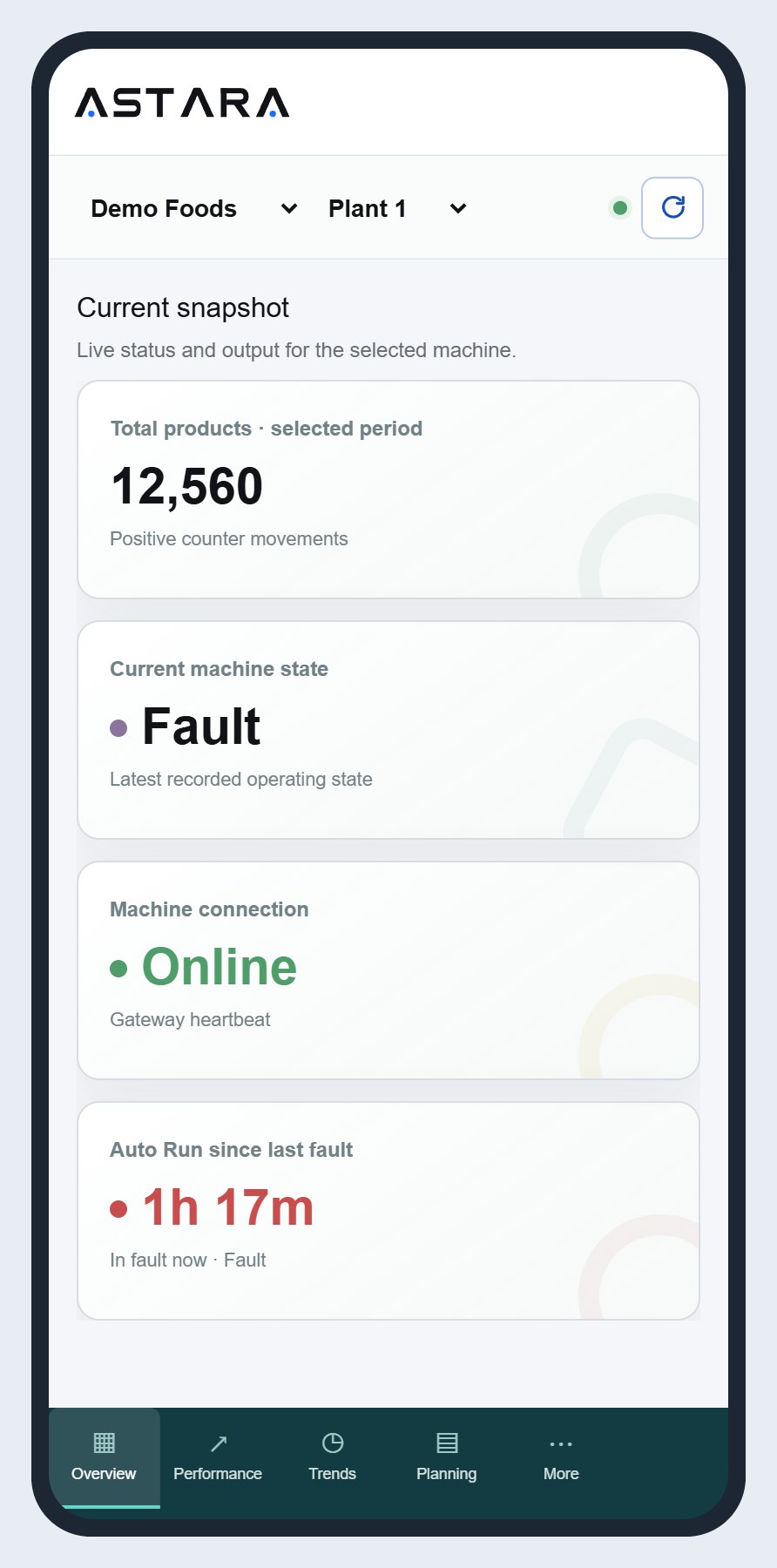
- Shows live status: what each machine is doing now (running, idle, faulted, stopped or offline) and since when.
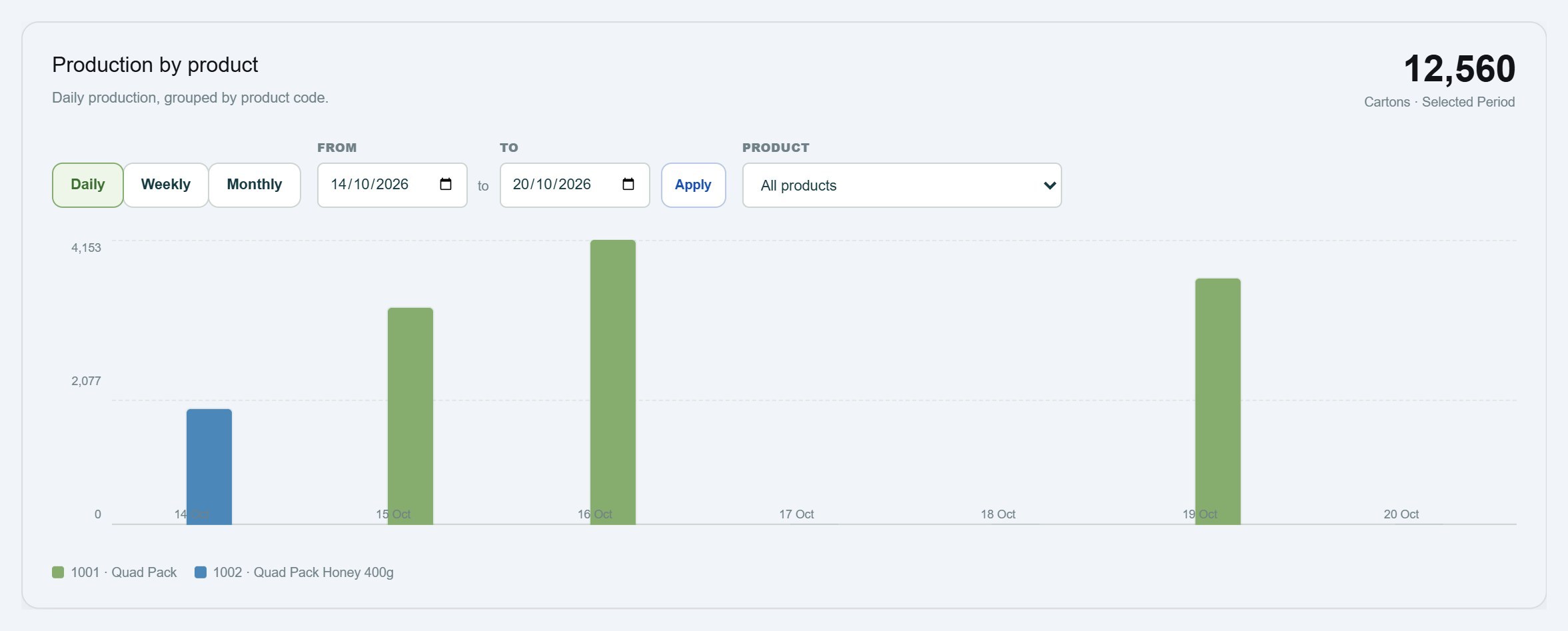
- Records output from the machine's production counter, by product.
- Times every stop and explains faults using the PLC's alarm codes.
- Summarises by shift, day and week, so trends are visible and meetings use the same numbers.
It does not control anything. Monitoring should be strictly read-only, so it can never affect how a machine runs.
What you need on site
Machines with PLCs that speak OPC UA
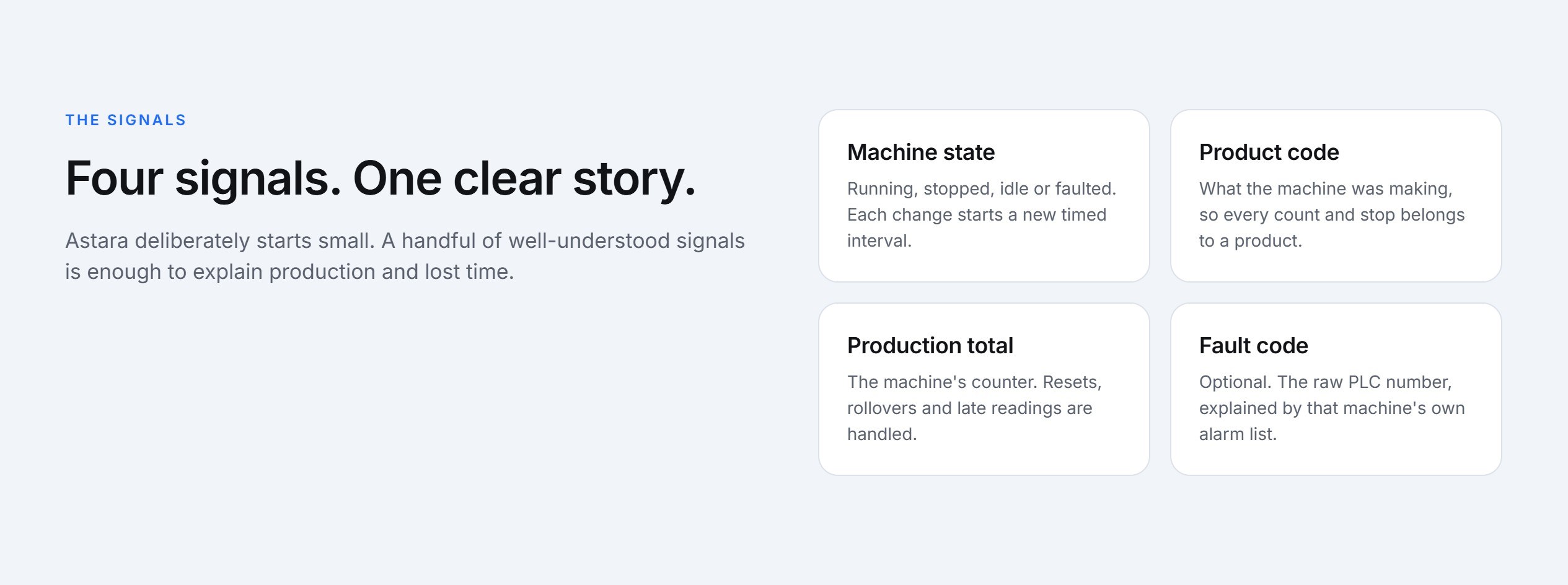
OPC UA is the standard, vendor-neutral way to read data from industrial controllers. Many PLCs include an OPC UA server, and others can add one with a firmware option or a small protocol gateway. A monitoring system needs only a few signals from each machine:
- machine state (for example Auto Run, idle, fault, stopped, manual),
- product code,
- a production total (counter),
- optionally, a fault or alarm code.
A small gateway
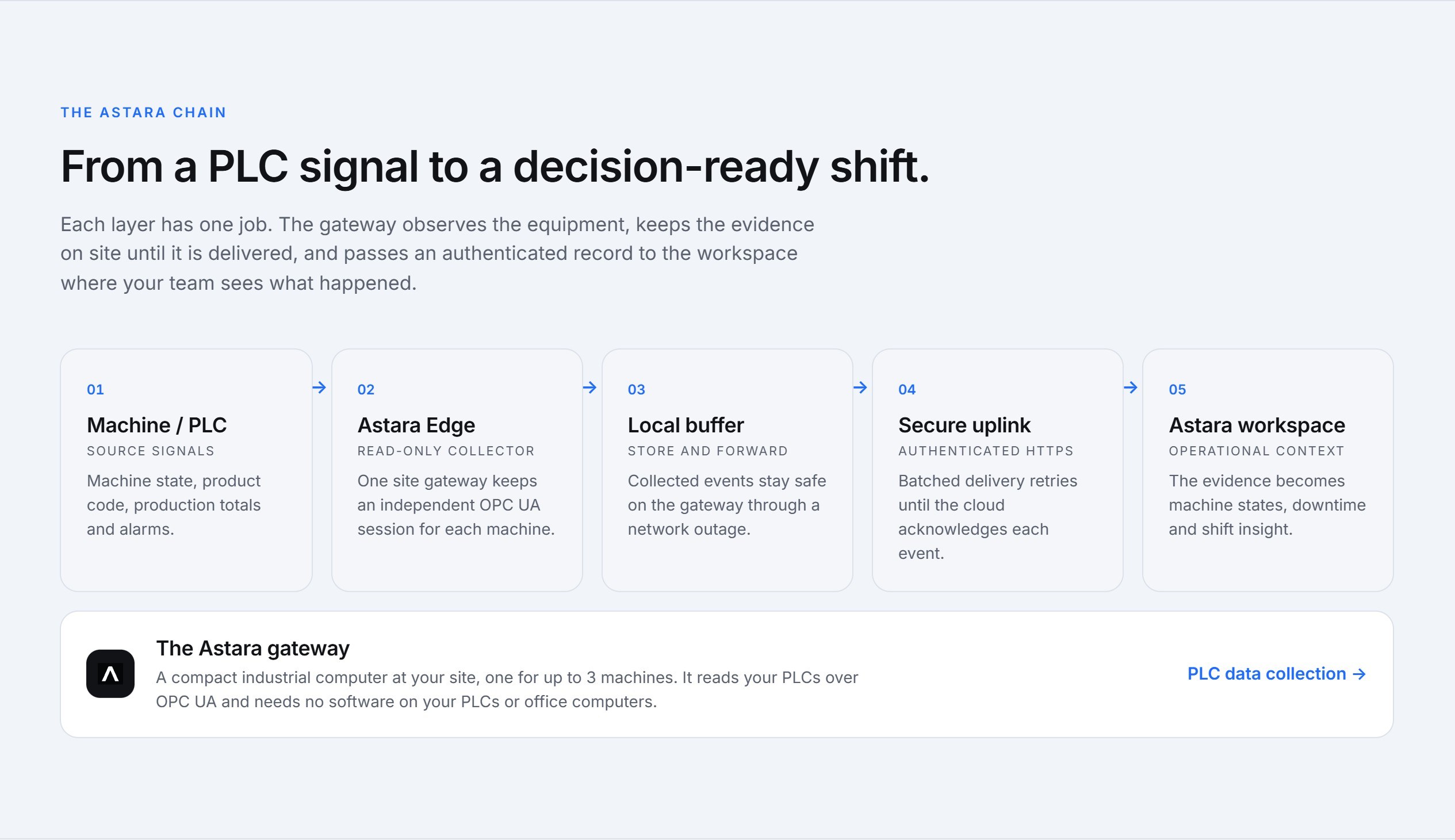
A compact computer on the site network connects to the machines, reads those signals and sends them securely to the cloud. A good gateway buffers every reading on local storage, so an internet outage loses nothing, and deletes data only after the cloud confirms it arrived. One gateway can usually serve several machines; Astara's gateways collect from up to three each.
An internet connection
Outbound HTTPS from the gateway is enough. No inbound ports, VPN or on-site server are needed.

Sensors vs PLC data
Add-on sensors (vibration, current clamps, stack-light monitors) are useful when a machine has no accessible controller, or for condition monitoring of motors and bearings. But a current clamp can only tell you that a motor is drawing power, not whether the machine is producing good product, which product is running, or which fault stopped it. Where a PLC is available, reading it gives richer, more accurate data with no extra hardware on the machine.
Start small
- Choose one machine: the line's constraint, or the one with the worst reputation.
- Confirm the signals with your controls engineer or machine builder.
- Install the gateway and connect it to that machine.
- Run for two weeks to build a baseline before changing anything.
- Review weekly with production and maintenance, then add the next machine.
If a machine isn't ready for a live connection, Astara can start from imported CSV production and alarm history while you sort out the PLC side.
What it should cost
For small plants, look for pricing per machine rather than per user, so everyone who should see the data can, and no large up-front implementation fee. Astara is priced per connected machine in Australian dollars with GST included, with everyone in your organisation included.
Questions to ask any vendor
- Is the connection to our PLCs read-only?
- What happens to our data if the internet drops?
- How is time without data shown?
- Where is our data hosted, and is it isolated from other customers?
- Can we start with one machine?
Astara is an equipment monitoring system built for small and mid-sized Australian manufacturers. Read about machine monitoring and how it works, or talk to us.