Production monitoring software for packaging lines
How production monitoring software helps food, beverage and metal packaging lines see live machine state, output per product and every stop, without a large MES project.
Packaging lines are some of the hardest-working equipment in manufacturing: fillers, formers, flow wrappers, labellers, case packers and palletisers linked by conveyors, running many SKUs at high speed. When one machine stops, the line stops. Production monitoring software gives everyone from operator to plant manager the same live picture of what each machine is doing and what it has produced.
What production monitoring software should show
Live machine state
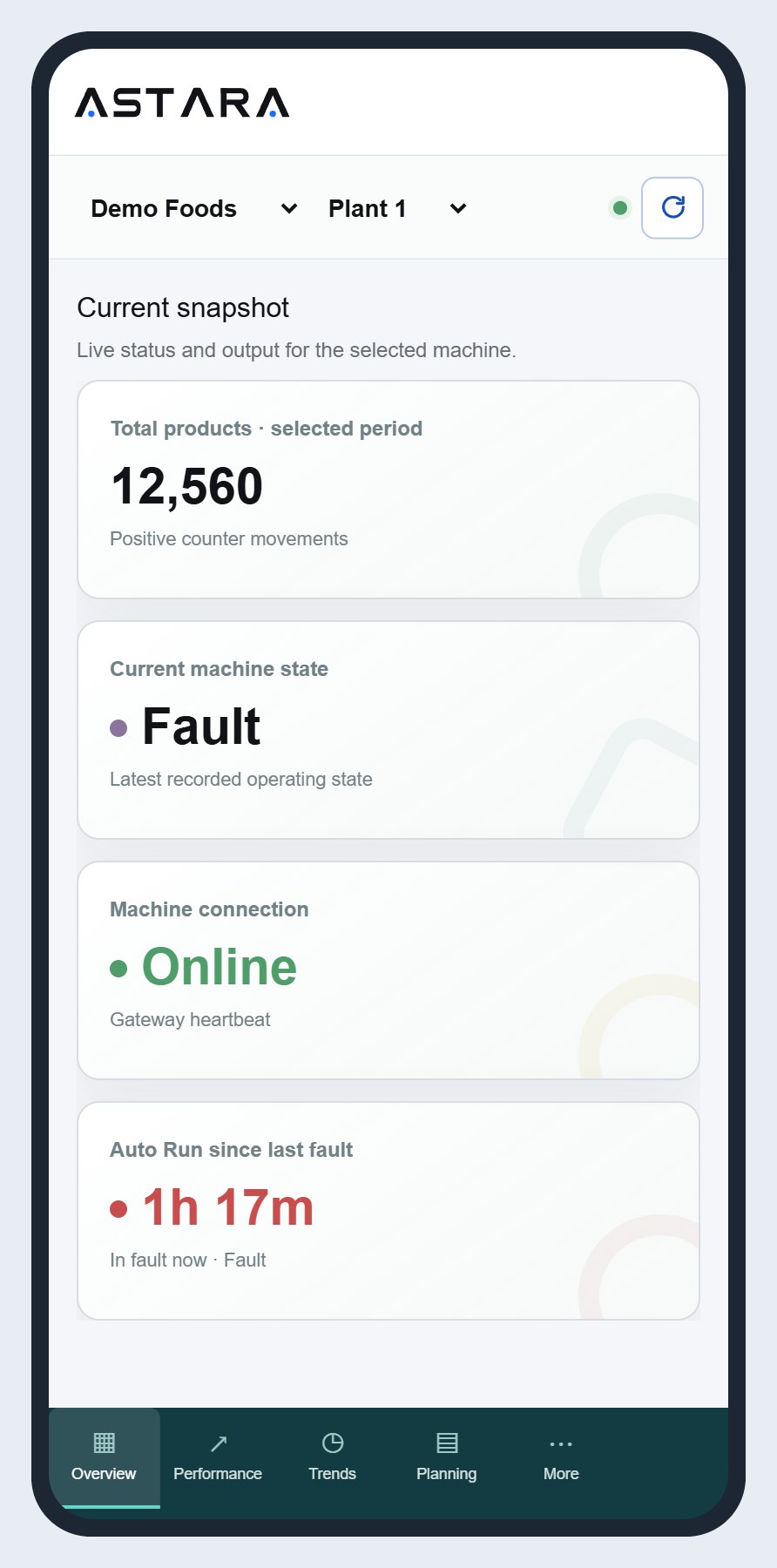
Is the filler running, idle, in fault or in manual right now? How long has it been in that state? Live state answers the first question anyone asks when output drops, without a walk to the line.
Output, by product
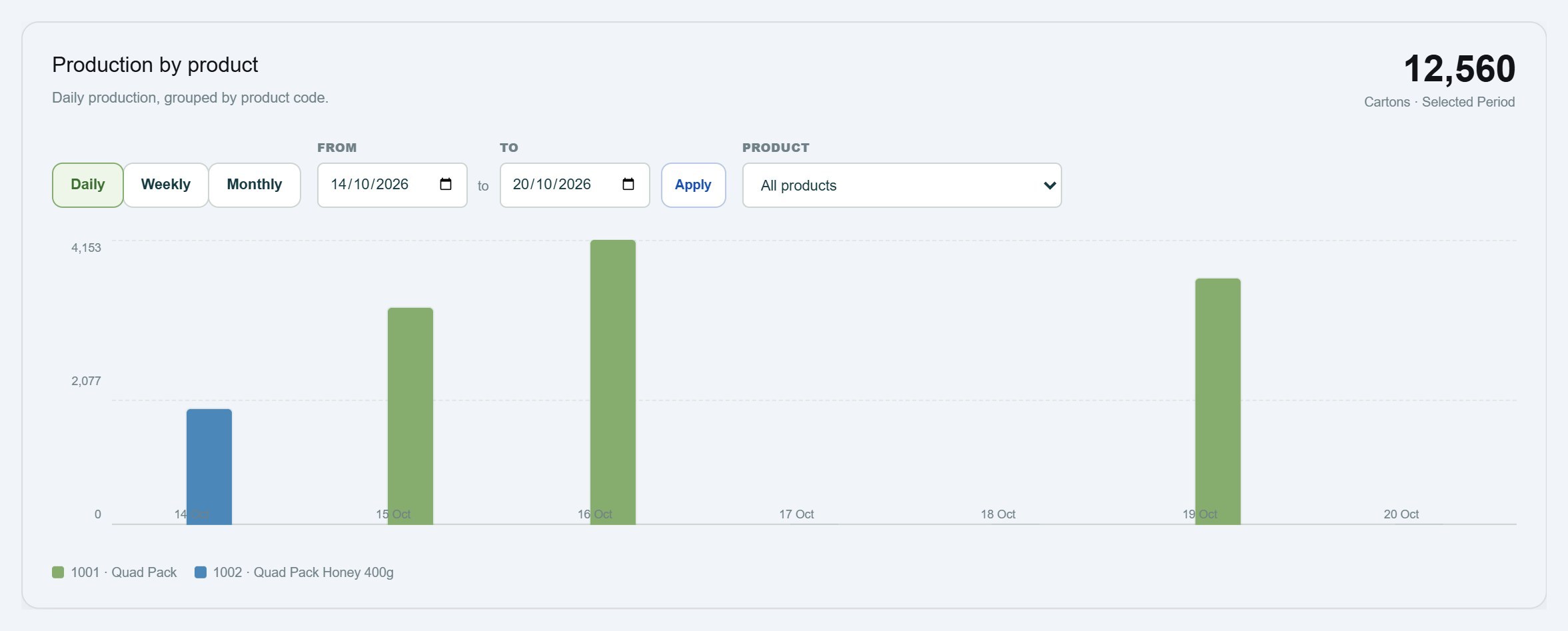
Packaging lines run many products, and they don't all run at the same speed. Monitoring software should count output from the machine's own production counter and group it by the product code the PLC reports. A slow day then has an explanation: three changeovers and a difficult 400 g pack, rather than a vague sense that the line was slow.
Rate over time
A production heartbeat, the count gained in each 15-minute interval, shows micro-stops and slow running that never trigger an alarm. A flat bar mid-shift is a stop someone should explain; a sawtooth pattern is a line that keeps starving.
Units that match how you plan
The PLC counts cycles or cartons, but your plan might be in packs, kilograms, tonnes or pallets. Good monitoring software converts the counted unit into the units you plan and report in, per product.
Downtime and faults
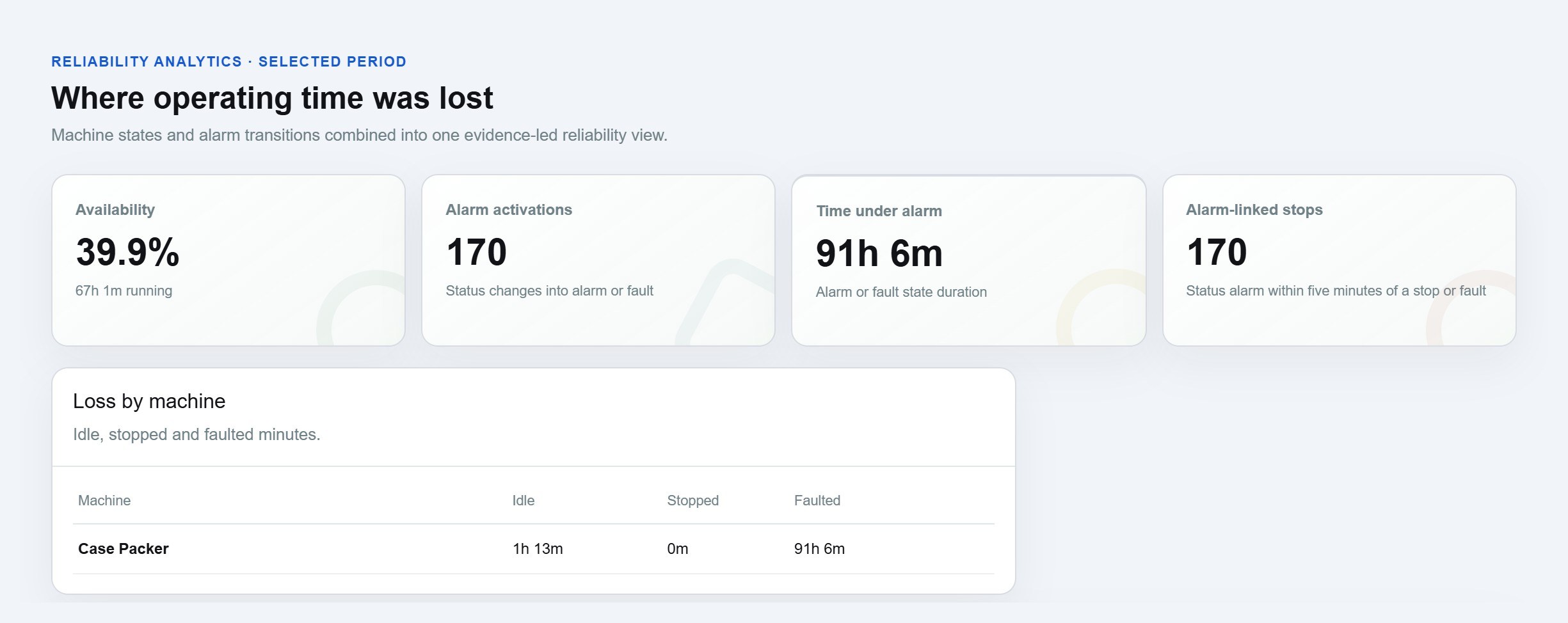
Every stop should be timed, linked to the product that was running and, where the PLC reports one, explained by the machine's own alarm code list. See downtime tracking for how Astara does this.
Packaging line monitoring without an MES project
Large manufacturers often get production monitoring as part of an MES rollout lasting months or years. Smaller plants need the visibility without the project. In practice, that means:
- Few signals per machine. Machine state, product code, a production total and optionally a fault code are enough to produce useful monitoring.
- A standard connection. OPC UA is supported by most modern PLCs, or by a gateway in front of older ones.
- Read-only access. The monitoring system reads and subscribes; it never writes to the controller, so it can't affect how the line runs.
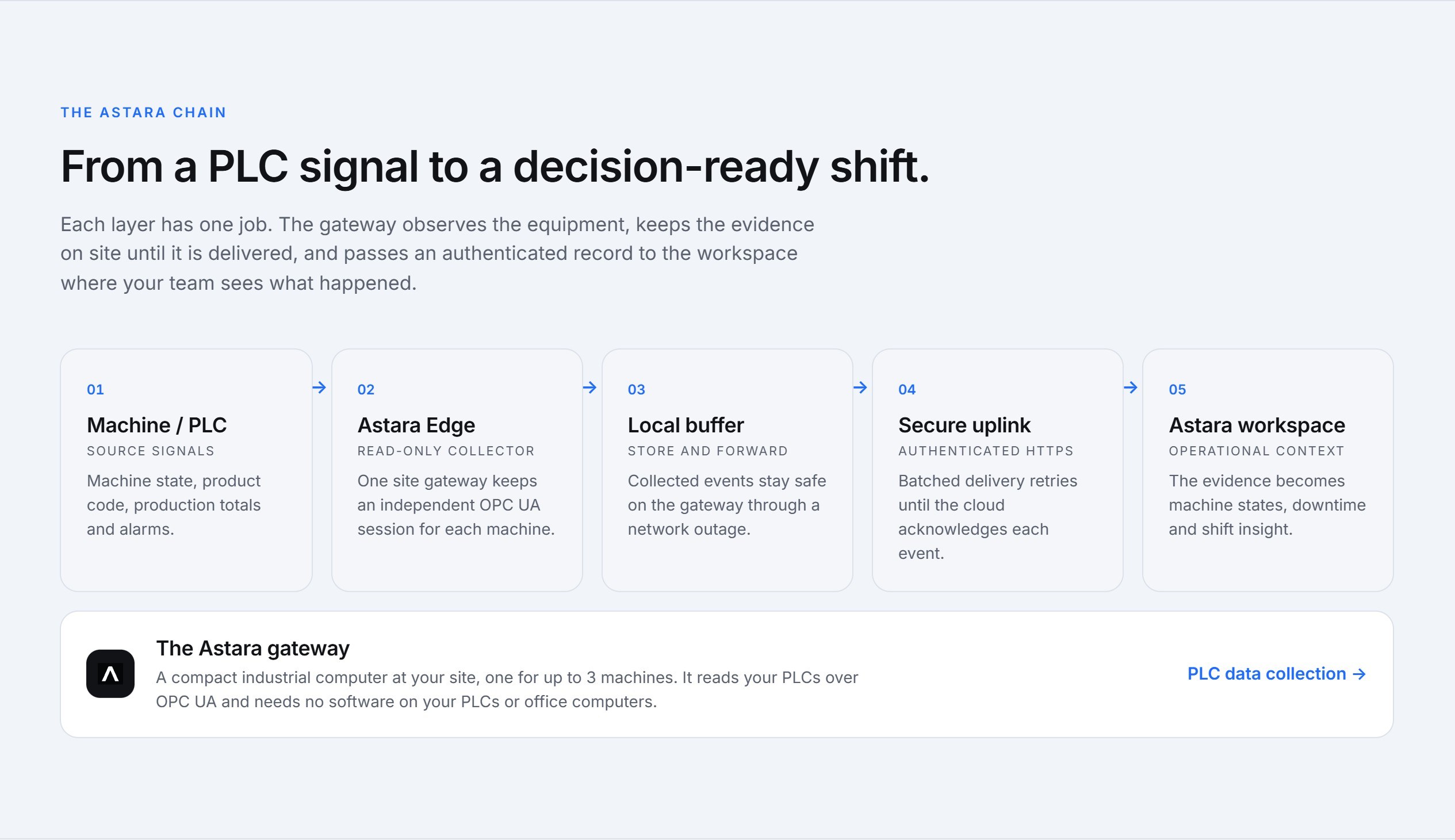
- A small site gateway that buffers data if the internet drops and sends it when the connection returns.
- Start with one machine, and add the rest of the line at your own pace.
Food packaging and metal packaging lines
The same principles apply whether you are filling honey jars, packing fresh produce, forming cans or wrapping confectionery. What differs is the product mix and how changeovers work, which is why product-aware monitoring matters. We've written about where the minutes go on food and packaging lines, and have a dedicated food and packaging page.
Who uses it, and how
- Operators and leading hands see the live state and today's output.
- Supervisors classify stops against the site's reason list.
- Planners enter production plans and compare them with what was made.
- Maintenance sees faults ranked by lost time and mean time between faults.
- Management reads the weekly report.
That only works if everyone has access, which is why Astara is priced per machine with unlimited users.
See it on your own line
Astara is production monitoring software for small and mid-sized Australian manufacturers, built around packaging lines. Read about machine monitoring and the workspace, or get in touch to connect your first machine.